Why do most personality tests fail to spark real change?
This 2026 guide deconstructs the psychometric logic behind characteristics tests, moving beyond static labels to focus on behavioral defaults.
We evaluate leading tools like IPIP-NEO, PrinciplesYou, and Moody Wonder, while exploring the critical distinction between biological traits and adapted characteristics.
Covering topics from predictive hiring and cross-cultural nuances to neuroplasticity, this article provides a data-driven framework to help you identify and [optimize] the patterns that shape your professional and personal life.
The Truth About Personality Tests: Why You’re Still a Stranger to Yourself
1.1 Stop Collecting Labels, Start Finding the Manual
Most people treat personality tests like weekly horoscopes.
You click a link, answer a few dozen questions about whether you "enjoy parties," and receive a four-letter code or a flattering title. You share it on social media and feel an immediate rush of being "seen." That feedback provides a nice hit of dopamine.
But the next morning, you wake up still not knowing how to handle a conflict with your boss. You are still anxious about a looming deadline. You are still awkward in social settings.
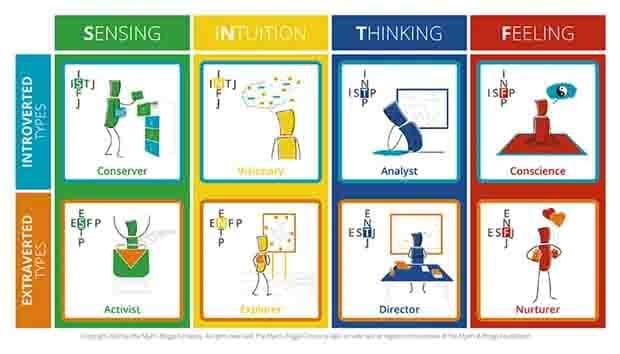
This is the "Label Trap." A label tells you who you are—it is like a sticker on your forehead. But stickers don’t solve problems. A real Characteristics Test shouldn't just give you a certificate of identity; it should give you a manual.
It doesn’t care about your "type." It cares about your automated response when life throws stress, temptation, or challenge your way.
1.2 Traits are the Cards, Characteristics are How You Play Them

To understand this, we need to separate two concepts often blurred together: Traits and Characteristics.
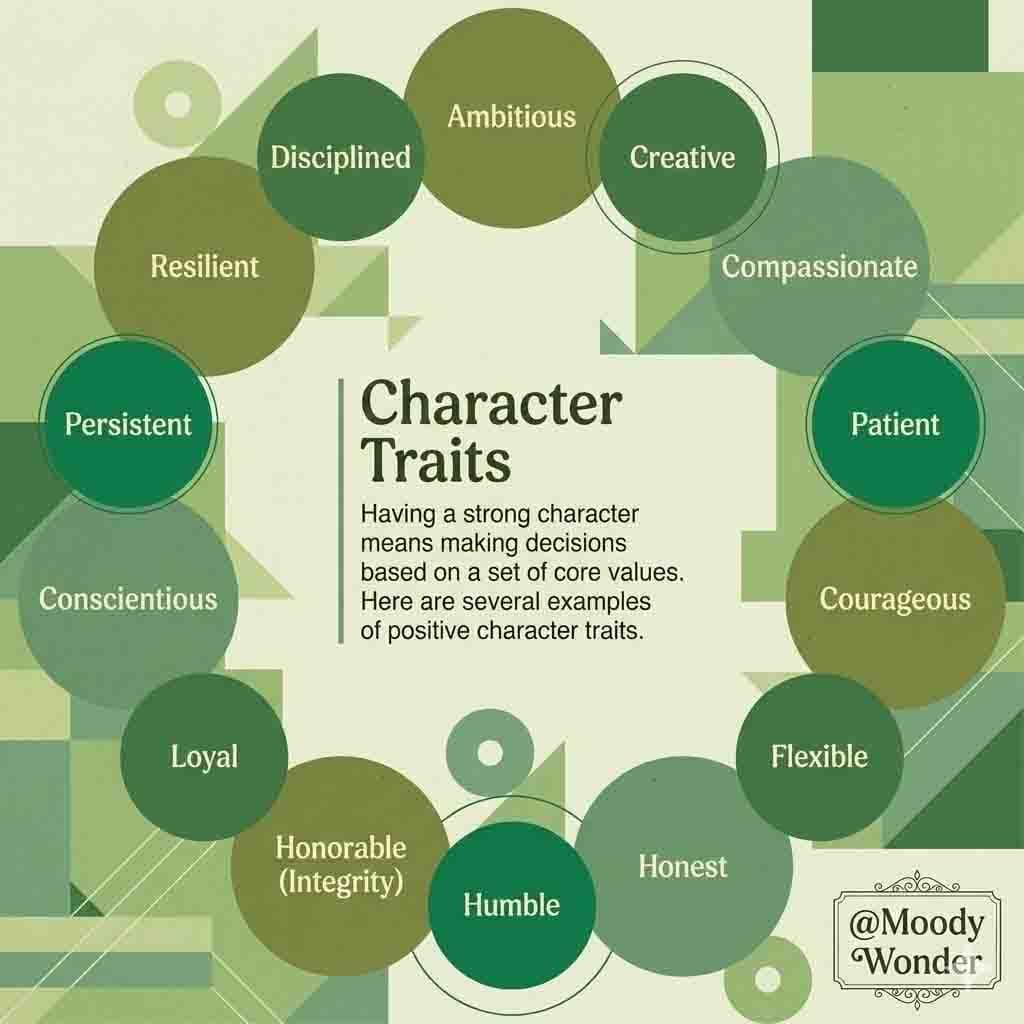
Think of a Trait as the hand of cards you were dealt with at birth. If you are naturally sensitive or naturally inclined toward solitude, that is your biological baseline. It is like your height or eye color—stable "hardware."
But a Characteristic is how you play that hand. It is your "software"—the way you use your traits to navigate life.
- A Trait is static: I am naturally prone to emotional swings.
- A Characteristic is dynamic: When I notice an emotional swing, I instinctively choose to "disappear" or "strike back."
Most of our struggle doesn’t come from the cards we were dealt, but from the fact that we keep using the same predictable strategy.
A good test helps you identify the behavioral patterns that have become hardwired into your system. It tells you that when you think you are being "deliberate," you are actually just avoiding a decision. When you think you are "striving for perfection," you are actually just afraid of being judged.
1.3 Self-Awareness as a Survival Skill in 2026
Why are we discussing this now?
In 2026, the half-life of skills is shrinking. AI can write code for you, build spreadsheets for you, and even mimic your tone in an email. In this environment, your only true premium is your uniqueness.
AI cannot replicate your gut reaction during a crisis, the specific rhythm you use to build deep trust with a partner, or the unique way you bounce back from failure.
Understanding your characteristics isn't about putting yourself in a box; it’s about creating space for growth. Once you understand your default response patterns, you move from "autopilot" to "manual control."
Self-awareness is not a luxury; it is a survival skill in 2026. You cannot upgrade your life until you first understand your "factory settings."
The Gold Standard: Why Scientists Don’t Use "Boxes"
2.1 The Polaroid vs. The Topographical Map (Types vs. Traits)
If you have ever taken a personality test online, you likely received a "Type." You are an Executive, a Mediator, or an INTJ. These are the Polaroids of psychology—quick, fun, and easy to share.
But here is the problem: humans are too deep for Polaroids.
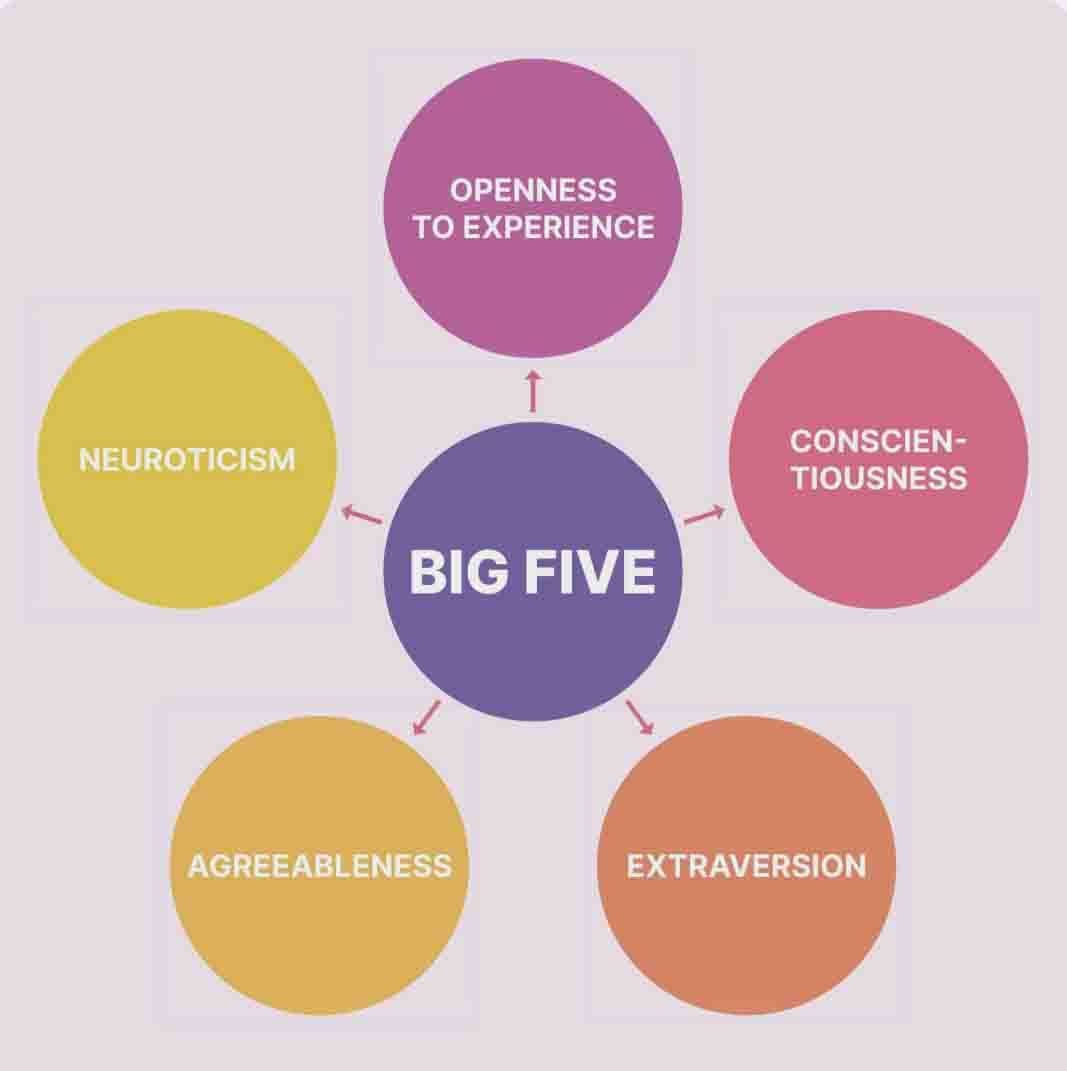
In the 1980s, psychologists realized that putting people into "boxes" was scientifically inaccurate. Most people don’t fit neatly into a category. Instead, researchers moved toward Trait Theory, specifically the Big Five (OCEAN).
If a "Type" is a box, a "Trait" is a slider on a soundboard. You aren't just an "extrovert" or an "introvert"; you are somewhere on the spectrum. One day you might be at a 70, another day at a 40. The Big Five doesn't tell you what you are; it measures the intensity of your defaults.
2.2 The OCEAN Model: The Five Dimensions of Your Mind
To understand how you function, you need to look at the five sliders that calibrate your behavior. In the scientific world, these are known as OCEAN:
- Openness: Are you a scout or a soldier? This measures your curiosity. High openness means you crave new ideas; low openness means you find comfort in the familiar.
- Conscientiousness: This is your internal "order" button. It’s the difference between the person who makes a bed every morning and the person who finds their keys in the fridge.
- Extraversion: This isn't just about being "loud." It’s about where you get your battery charged. Do you plug into a crowd, or do you need the silence of a room?
- Agreeableness: This is your social friction. Do you prioritize harmony, or do you prioritize the cold, hard truth?
- Neuroticism: Think of this as your "smoke detector." It’s how sensitive you are to stress and threats. A high score means your alarm goes off easily; a low score means you stay calm while the kitchen is on fire.
The magic isn’t in one slider; it’s in the combination. Your unique mix of these five dimensions is what creates the "flavor" of your personality.
2.3 The Myth of the "Middle"
Most personality tests fail because they force you to choose: Are you a thinker or a feeler? The reality is that most of us are ambiverts. We fall somewhere in the middle of the curve. This is why you might feel like a "Mediator" on Monday but an "Architect" on Friday.
When you stop trying to fit into a type, you start to see your Adaptive Range.
The goal of a 2026 characteristics test isn't to tell you that you are "fixed" in the middle. It is to show you how wide your range is. Can you be a high-agreeableness person who acts tough during a negotiation? Yes. That is called a Functional Skill. But knowing that your "default" is agreeableness helps you understand why that negotiation feels so exhausting afterward.
2.4 Why Science Prefers the "Hard" Truth
Why does this matter to you?
Because "Boxes" (Types) give you an excuse. If you say, "I’m an XXXX, so I can’t do public speaking," you’ve built a prison for yourself.
But if you say, "I am low on the Extraversion slider," you’ve identified a resource problem. You know that public speaking will drain your battery faster than it drains someone else's. You don't quit; you just learn to manage your energy differently.
Traits offer a map for growth. Types offer a justification for staying the same.
The 2026 Power Rankings: Top 5 Characteristics Tests Reviewed
3.1 The Scientific Gold Standard: The Big Five (IPIP-NEO)
(For the Data Purists)
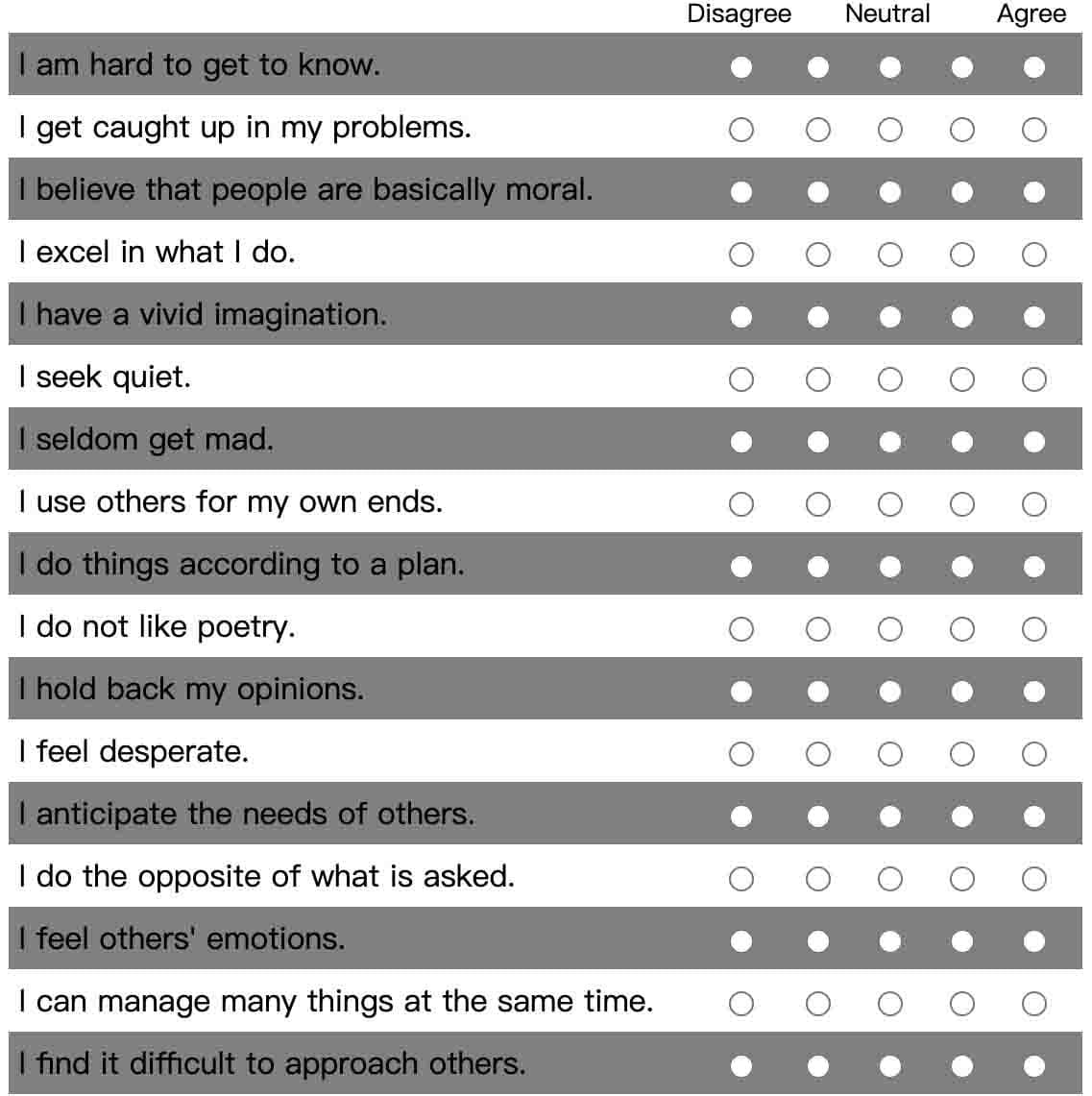
If you want the raw, unvarnished data that psychologists use in their labs, IPIP-NEO is your starting point. It is the open-source version of the clinical "Gold Standard" (the NEO-PI-R). It doesn’t give you a catchy title or a "personality type." Instead, it provides a cold, hard map of your traits across 30 different facets.
- The Value: It removes the marketing fluff and shows you your baseline "psychological DNA."
- Best For: When you want a rigorous academic breakdown of how you compare to the general population.
- Link: **Take the IPIP-NEO at OpenPsychometrics**
3.2 The Modern Professional Benchmark: PrinciplesYou
(For High-Stakes Growth)
Created by Ray Dalio (founder of Bridgewater) and Adam Grant (organizational psychologist), PrinciplesYou is perhaps the most high-quality free assessment available in 2026. It combines the rigor of the Big Five with a focus on how you actually "function" in teams and leadership.
- The Value: It offers incredibly deep, narrative-driven insights. It doesn't just tell you that you are "conscientious"; it explains how your level of detail-orientation helps or hurts your team.
- Best For: Professionals, entrepreneurs, and anyone working in high-complexity environments.
- Link: **Explore PrinciplesYou**
3.3 The 2026 Evolution Roadmap: Woody Wonder
(For Adaptive Growth)
This is where we talk about Woody Wonder.
Why did we launch this brand in 2026? Because we found that traditional tests have one major flaw: They give you a destination, but they don't give you a path.
Woody Wonder bridges the "narrative" feel of MBTI with the "scientific rigor" of the Big Five. We don’t just tell you who you are; we use AI-driven algorithms to generate an Adaptive Map.
- The Value: It acknowledges that you are fluid. It looks at your current life stage and career goals to show you how to fine-tune your behavioral characteristics.
- Best For: When you don't just want to "know" yourself, but want to see a tangible trajectory for your daily evolution.
- Our Assessment: **Start your journey with Woody Wonder**
3.4 The Talent Maximizer: CliftonStrengths
(For Career-Driven)
Gallup’s CliftonStrengths remains a staple in the corporate world for one simple reason: It stops you from obsessing over your weaknesses. Its philosophy is identical to the one in Atomic Habits: double down on what you are naturally good at until you are the best in the world at it.
- The Value: It identifies your top 5 "Signature Themes." It’s built for action, not just reflection.
- Best For: When you are facing burnout or need a strategy for your next career move.
- Link: **Explore Gallup CliftonStrengths**
3.5 The Meaning Seeker: VIA Character Strengths
(For Positive Psychology)
Developed by the pioneers of Positive Psychology, the VIA Survey is free and focuses entirely on your "virtues"—qualities like bravery, curiosity, and kindness. It doesn’t measure your "productivity"; it measures your character.
- The Value: Research shows that using your "Signature Strengths" leads to higher levels of happiness and less stress.
- Best For: When you feel a lack of meaning or want to find a sense of inner purpose.
- Link: **Take the Free VIA Survey**
3.6 How to Choose Your Tool
When facing these options, ask yourself: "What is my current bottleneck?"
- If you need Scientific Accuracy: Use IPIP-NEO.
- If you need Career Insight: Use PrinciplesYou or CliftonStrengths.
- If you want Personal Happiness: Use VIA.
- If you want a Path to Evolve: Woody Wonder was built for exactly this.
Can (and Should) You Prepare for a Test?
4.1 The "Ideal Candidate" Trap
Whenever someone sits down for a personality or career assessment, there are usually two "versions" of themselves fighting for control: the real you and the version of you that you think the world wants to see.
You might think: "If I appear more extroverted or more decisive, am I more likely to get the job?"
This is known as Social Desirability Bias. It is our natural instinct to show our best side. But in a characteristics test, this is like drinking massive amounts of water before a blood test—you might dilute the results, but you aren't changing your DNA.
If you win a job by pretending to be someone else, you have effectively sentenced yourself to spend eight hours a day playing a character you don't like. This is the primary cause of "Role-Misalignment Burnout." People collapse six months into a new role because their true characteristics are constantly clashing with their professional mask.
4.2 Why Algorithms Catch the Mask
Many people believe they can "game" the system. However, in 2026, professional psychometric tools—like the advanced algorithms used by Woody Wonder—feature multiple "anti-cheat" mechanisms:
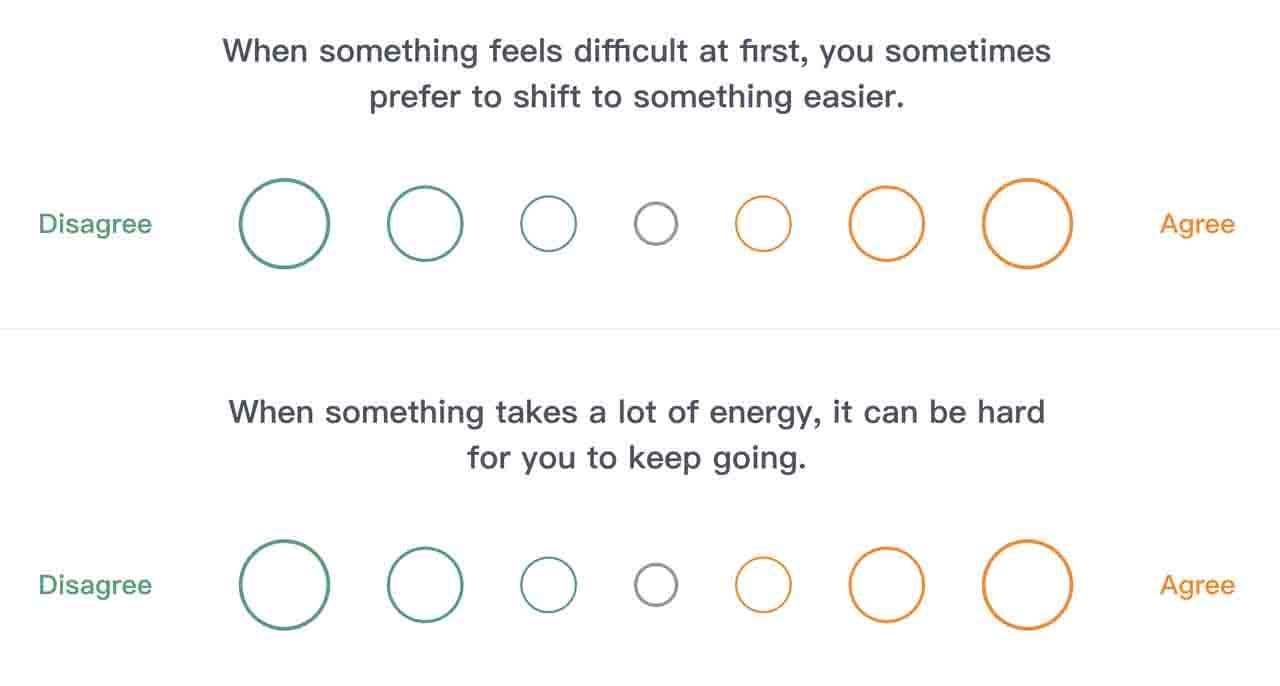
- Ipsative Scaling: The system won't ask if you are "hardworking," because it knows everyone will say yes. Instead, it forces you to choose between two equally positive traits. For example: "Would you rather prioritize extreme accuracy or team harmony?" You must sacrifice one. This is where your true priorities surface.
- Infrequency Scales: If you describe yourself as perfect, claiming you "never have bad thoughts" or "never procrastinate"—the algorithm will flag your report as "low validity."
The highest form of strategy is honesty. In the world of data, consistency is far more persuasive than perfection.
4.3 The Only Preparation That Works: Priming
While you shouldn't prepare answers, you should prepare your state.
If you click start while you are exhausted, angry, or fresh off a failure, your results will be clouded by "emotional noise." Here is a James Clear-style guide for preparation:
- Pick a "Neutral" Time: Don't take the test on a Monday morning or a late Friday night. Find a time when you are alert and emotionally stable.
- Switch to "Extreme Honesty" Mode: Tell yourself, "This isn't an exam; it’s a mirror. A pimple in the mirror won't disappear just because I close my eyes."
- Don't Overthink: Your first instinct is usually the most accurate. If you hesitate for more than 10 seconds on a question, you have likely stopped being yourself and started "acting."

4.4 The 2026 Rule: Alignment Over Performance
In the past, tests were designed to find the "best" person. In 2026, they are designed to find the "best fit."
If you are a deep-thinking, slow-paced introvert, being "filtered out" of a high-pressure, fast-paced sales role is actually a rescue. It saves you from months of misery.
A characteristics test is not a hurdle; it is a filter. Its purpose is to place you in an environment where you can shine naturally, rather than forcing you to struggle in the shadows of a role that doesn't fit your wiring.
Validity, Reliability, and the Barnum Effect
5.1 The Barnum Effect: The "One-Size-Fits-All" Invisibility Cloak
Have you ever read a personality description and felt like it had peered into your very soul?
"You have a great deal of unused capacity which you have not turned to your advantage." "While you have some personality weaknesses, you are generally able to compensate for them."
Sounds exactly like you, right? It also sounds like everyone else on the planet.
This is the Barnum Effect. It exploits a fundamental human instinct: our tendency to believe that vague, general, and mostly positive descriptions are uniquely tailored to us.
A real Characteristics Test doesn’t feed you flattering fluff. If a report reads like a series of compliments or is filled with non-committal words like "sometimes," "perhaps," or "tends to," it is likely just a digital placebo.
5.2 The Broken Scale: A Lesson in Reliability
In psychometrics, two words determine the life or death of a tool: Reliability and Validity.
Think of Reliability as a bathroom scale.
If you step on it now and it says 70kg, but a minute later it says 80kg, the scale isn't recording your "dynamic changes"—it’s just broken.
Many popular personality tests suffer from this. If you are an "Executive" on Monday but a "Mediator" on Friday, the tool’s reliability is failing.
Personality evolves, but your core characteristics do not shift radically in five days. A high-quality test (like those following the Woody Wonder standards) must stand the test of time, ensuring that what you are seeing is a stable behavioral pattern, not just a temporary mood swing.
5.3 What is Validity?
If Reliability is "consistency," then Validity is "accuracy."
Imagine you are practicing archery. You hit the exact same spot every time (this means you are consistent, or "reliable"), but that spot is outside the target.
Many tests measure things accurately, but they measure the wrong things. For example, a tool claiming to test "Leadership" might actually just be measuring how "talkative" you are.
In 2026, validity equals predictive power. A valid characteristics test should be able to predict how you will actually react when your boss questions your work in next week’s meeting. If it can’t explain or predict your real-world behavior, it’s just a game.
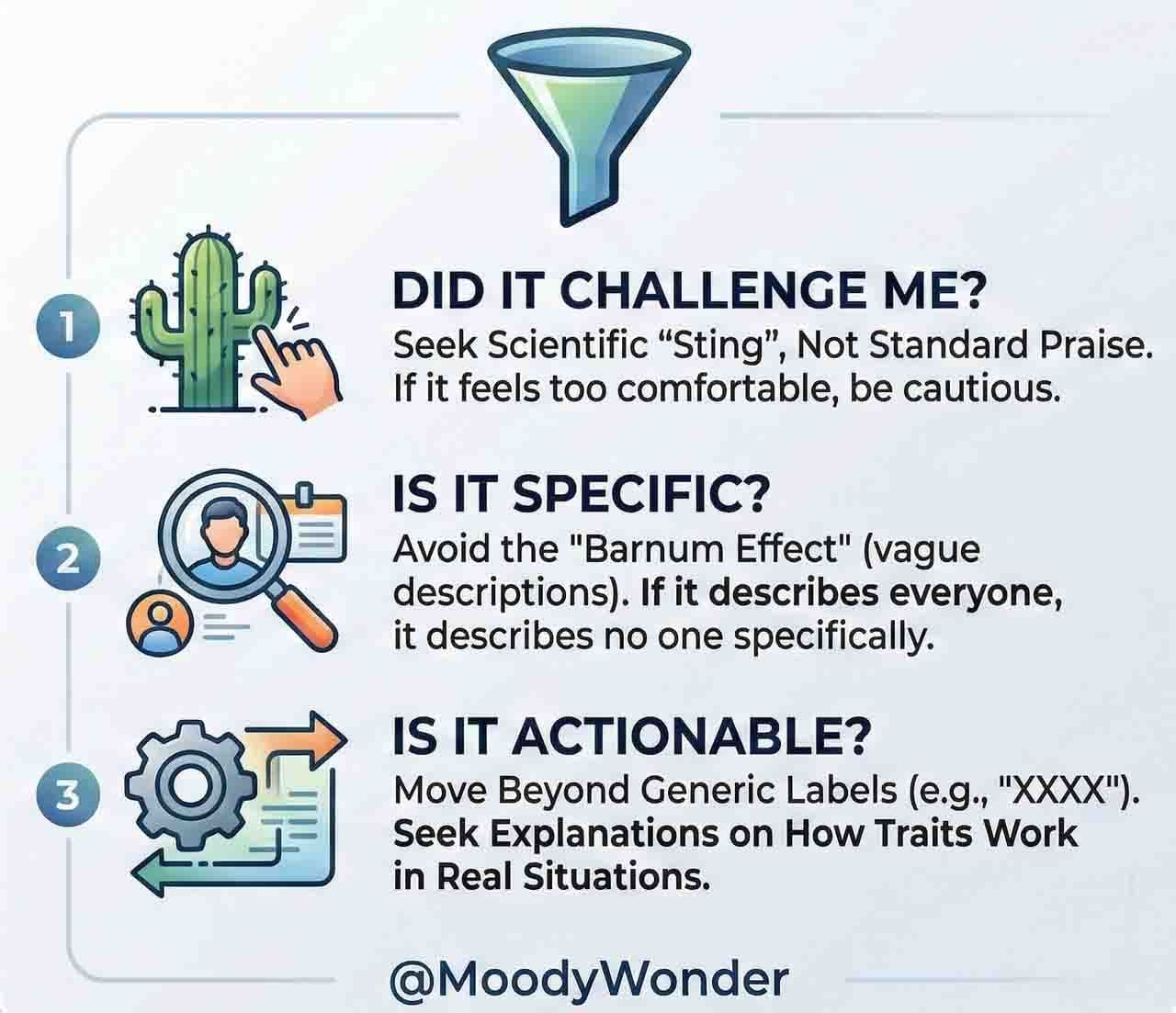
5.4 The 3-Second "Sniff Test"
When you encounter a new test, use these three questions to filter out the noise:
- Did it challenge me? If the results are 100% praise, be skeptical. True science usually has a bit of a "sting" to it.
- Is it specific? If you could swap your name with your neighbor’s and the report still feels "accurate," you are looking at the Barnum Effect.
- Is it actionable? If it only gives you a label (e.g., "You are an XXXX") without explaining how that trait holds you back in specific situations, it is useless.
Why Organizations Obsess Over Your Metrics
6.1 The $50,000 Mistake (Predictive Hiring)
Hiring the wrong person is the most expensive mistake a manager can make. By the time you account for recruitment costs, onboarding time, and the lost productivity of a person who isn't a good fit, a "bad hire" can easily cost a company over $50,000.
In the past, managers relied on "gut feelings" during interviews. But gut feelings are often just hidden biases. In 2026, companies use characteristics tests as a "Truth Filter."
They aren't looking for the "best" person in the world. They are looking for the person whose automated responses match the demands of the role. If a job requires someone to handle 50 angry customer calls a day, they don't want a "hero" who will burn out in three weeks; they want someone with a naturally high Stress Buffer Capacity.
6.2 Culture Fit vs. Culture Add
For a long time, companies hired for "Culture Fit." They wanted people who were exactly like the current team—people they could grab a beer with.
But "Fit" often leads to groupthink. In 2026, the best organizations hire for "Culture Add."
They use characteristic maps to find the missing piece of the puzzle. If a team is full of high-energy "Visionaries" who keep starting new projects but never finish them, the manager doesn't need another Visionary. They need an "Executor"—someone with high Conscientiousness who finds joy in the details and the finish line.
A characteristics test tells the company what you bring to the table that isn't already there.
6.3 The Remote Work "Shock Absorber"
In a world of remote work and Slack-based communication, the "vibe" of an office has disappeared. Managers can’t see when you are struggling or frustrated.
This is why they obsess over your metrics. They need to know your Communication Style before you even start.
- Do you need clear, written instructions to feel secure?
- Do you thrive on autonomy, or do you feel abandoned without daily check-ins?
- How do you react when a project scope changes at 4:59 PM on a Friday?
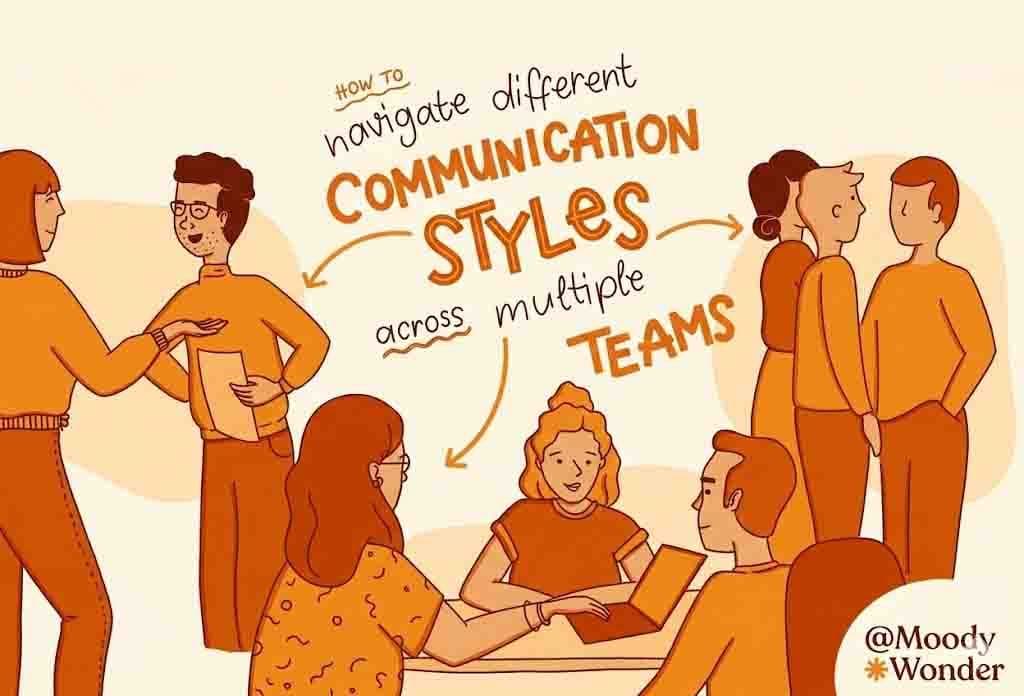
Companies use tools like Woody Wonder or PrinciplesYou to build a "User Manual" for their employees. It’s not about surveillance; it’s about interoperability. It’s about making sure two different people can work together without grinding their gears.
6.4 What Are They Actually Looking For?
When an employer looks at your report, they aren't looking for a "perfect" score. There is no such thing. They are looking for Honesty and Self-Awareness.
An employee who knows they are "low on Agreeableness" but has developed a "Characteristic" of professional politeness is a high-value asset. It shows they have Manual Control over their hardware.
Employers don't want robots. They want humans who understand their own operating system.
How Your Traits Impact Your Connection to Others
7.1 The Communication Delta
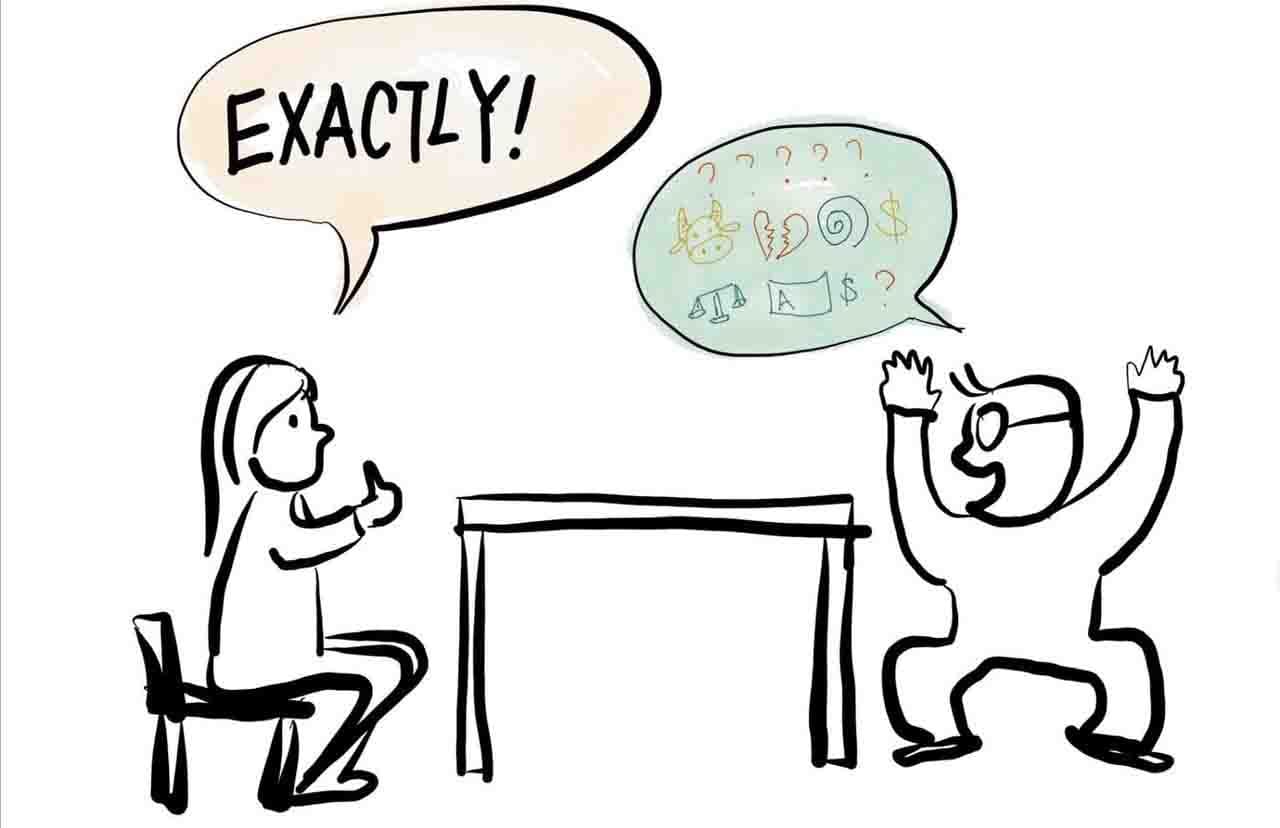
Have you ever had a conversation where you felt like you were speaking English, but the other person was hearing Greek?
This is the Communication Delta. It’s the gap between your natural cognitive style and theirs. If you are high in Conscientiousness, you likely crave structure and "The Plan." If your partner or best friend is high in Openness but low in order, they crave "The Vibe" and spontaneity.
When these two worlds collide without self-awareness, the result isn't "balance"—it’s friction. You think they are irresponsible; they think you are a control freak.
Relational Intelligence is the ability to see that "gap" and build a bridge across it. It’s not about changing who you are; it’s about translating your needs into a language the other person can actually process.
7.2 The Myth of Compatibility
For decades, dating apps and pop psychology told us that "Opposites Attract." The idea was that a quiet person needs a loud person to take them out of their shell.
The data in 2026 tells a different story. While small differences can be exciting, long-term stability is built on shared "Big Five" baselines. If one person is extremely high in Neuroticism (very sensitive to stress) and the other is extremely low (a "nothing bothers me" type), the relationship often struggles. The sensitive partner feels unheard and "crazy," while the calm partner feels exhausted by the constant "drama."
True compatibility isn't about being identical; it’s about having a similar "Operating Temperature." When your "smoke detectors" are calibrated at a similar level, you stop fighting about whether there is a problem and start solving the problem together.
7.3 Friendship Architecture: Choosing Your Circle
Most of us fall into friendships by accident—neighbors, coworkers, or people we went to school with. But in a world where your "Attention" is your most valuable currency, you need to be more deliberate.
Using characteristics tests like Woody Wonder or PrinciplesYou with your inner circle isn't weird, it’s strategic.

- The Challenger: You need friends who are low in Agreeableness but high in Openness. They will tell you the truth when you make a mistake.
- The Anchor: You need friends high in Conscientiousness. They are the ones who actually show up when they say they will.
- The Battery: You need the Extraverts who drag you out of your house when you’ve been staring at a screen for three days.
A resilient social circle is a diversified portfolio of characteristics. You don't need five people exactly like you; you need a team that covers your "blind spots."
7.4 From "You Are Wrong" to "We Are Different"
The greatest gift of understanding your characteristics in a relationship is the end of Moral Judgment.
When your partner forgets to lock the door for the third time, you stop thinking "They don't care about my safety" (a moral judgment) and start thinking "They are naturally low in Conscientiousness/Detail-orientation" (a characteristic fact).
This shift moves the conversation from Blame to Strategy. Instead of a fight, you buy a smart lock that auto-locks. You stop trying to "fix" their personality and start "designing" around it.
Why One Test Does Not Fit All Borders
8.1 The "WEIRD" Bias in Psychology
Most personality tests—including the Big Five and MBTI—were developed in what researchers call WEIRD societies: Western, Educated, Industrialized, Rich, and Democratic.
When a test asks if you are "assertive" to measure Extraversion, it assumes that assertiveness is a universal sign of a healthy social life. But in many Eastern cultures, true social intelligence is often shown through restraint and harmony.
If you are a high-performer in a city like Shanghai or Tokyo, your "Extraversion" might look like deep listening and subtle influence, rather than shouting in a boardroom. If your test doesn't account for this, it might label you as "passive" when you are actually being "strategic."
8.2 The Translation Trap
Language isn't just a set of labels; it is a way of seeing the world. When a psychometric question is translated from English to Chinese or Japanese, the "soul" of the question often disappears.
Take the word "Aggressive." In a New York sales office, being "aggressive" is often a compliment, it means you are a go-getter.

In a traditional Japanese work environment, "aggressive" is a red flag—it means you are disruptive and self-centered.
If you take a test that hasn't been culturally validated, you aren't just answering questions; you are fighting a linguistic ghost. You might answer "No" to a question you should have said "Yes" to, simply because the tone felt wrong.
8.3 The Digital Nomad’s Dilemma: Trait vs. Context
One of the most fascinating things about humans in 2026 is our ability to "code-switch."

If you’ve lived in a high-pressure environment like Shanghai, moved to a creative hub like Dali, and then settled into the slower, community-focused rhythm of Chiang Mai, you know that your Traits stay the same, but your Expression changes.
- Your Conscientiousness in Shanghai might manifest as "hustle" and 12-hour days.
- Your Conscientiousness in Chiang Mai might manifest as "reliability" and deep, focused work for 4 hours.
A good test should measure your "engine," not just the "speed" you are driving at this moment. It should recognize that your environment acts as a volume knob for your traits.
8.4 Building a Global "Operating Language"
In a globalized workforce, we need a "Unified Psychological Language," but we must respect the "Local Dialects."
When you share your Woody Wonder or PrinciplesYou results with a global team, don't just send the PDF. Add a "Cultural Context" note. Tell them: "My results say I am low on Agreeableness, but in my culture, this shows up as a commitment to direct honesty for the sake of the project's success."
Self-awareness is the bridge; cultural nuance is the foundation.
The Growth Roadmap: From Static Data to "Adaptive Personality"
9.1 The "Snapshot" Myth: Your Results are Not a Life Sentence
The biggest mistake people make after taking a test is saying, "Well, I’m just not a detailed person," or "I’m naturally anxious, so I can’t lead." This is what psychologists call a Fixed Mindset. It treats a test result like a tombstone—something carved in stone that defines you forever.
In reality, your characteristics are a snapshot of your current "factory settings" and your "life experiences" at this exact moment. Thanks to Neuroplasticity, your brain is capable of rewriting its behavioral software well into old age.
A characteristics test doesn't tell you who you are; it tells you who you have become up to this point. It shows you your current path so that you can decide if you want to stay on it.
9.2 The Evolution Loop: Why You Need to Re-Test
In 2026, life moves at ten times the speed it did twenty years ago. You might change careers three times in a decade. You might move across the world or experience a life-altering relationship.
These events aren't just memories; they are inputs that recalibrate your personality.
- The Startup Founder: Might see their "Conscientiousness" slider move up as they learn the hard way that details matter for survival.
- The Digital Nomad: Might see their "Openness" increase as they navigate new cultures and languages in places like Thailand or Portugal.
This is why we built the Evolution Loop into the Woody Wonder philosophy. You shouldn't just test once and walk away. You should check your "alignment" every 12 to 18 months. Are you becoming the person you need to be for the life you want to live?
9.3 The "Adaptive Personality": Playing the Long Game
In a world dominated by AI, the most valuable human trait is Adaptability.
An Adaptive Personality is someone who knows their "Defaults" (their Big Five traits) but has developed the "Skills" to act outside of them when necessary.
- If your default is Low Extraversion, you don’t avoid the stage. You learn the skill of public speaking, knowing that it will cost you energy, and you plan a "recovery day" afterward.
- If your default is Low Conscientiousness, you don’t accept being messy. You build systems (like the ones in Atomic Habits) that do the work for you.
The goal of self-awareness isn't to accept your limitations—it's to design a life that accounts for them.
9.4 The Ultimate Competitive Advantage in 2026
We are entering an era where technical skills are becoming commodities. Coding, writing, and analyzing data are all being handled by machines.
The only thing AI cannot do is Self-Regulate.
It cannot feel its own pulse. It cannot realize it is being "defensive" in a meeting. It cannot consciously decide to be more "agreeable" to save a failing partnership.
Self-awareness is the only recession-proof skill. When you understand your own operating system, you stop being a victim of your impulses and start becoming the architect of your behavior.
Ready to See Your Own Map?
If you are tired of "digital horoscopes" and ready for a scientific, adaptive look at how you actually function, we invite you to experience the Moody Wonder Assessment.
We didn’t build this to give you a four-letter box. We built it to show you your Adaptive Range, to help you see where your natural "sliders" are set today, so you can decide where to move them tomorrow.
Whether you are looking to bridge a gap in your relationship, navigate a high-stakes career move, or simply understand why you do what you do, Moody Wonder is designed to be your partner in that evolution.
Stop guessing. Start measuring. Start evolving.
👉 **Take the Moody Wonder Assessment**
FAQ: Common Questions About Characteristics Tests
Q1: Are the results of a personality test permanent?
A: No. While your biological Traits are relatively stable, your behavioral Characteristics evolve as your environment, career, and mindset change. Think of your result as a "live map" rather than a fixed destination. We recommend re-testing every 12 to 18 months to track your personal trajectory.
Q2: Why does my result feel different from my self-perception?
A: This usually happens for two reasons. First, the test might have low Validity (falling into the Barnum Effect trap mentioned in Chapter 5). Second, we often unconsciously answer as our "ideal self" rather than our "real self." For the most accurate result, re-test when you are in a neutral emotional state and focus on your past actions rather than your future wishes.
Q3: Can my employer use these results as a reason to fire me?
A: In a professional organization, a characteristics test should never be the sole basis for dismissal. Its true value lies in Role Alignment and reducing communication friction. If your results clash with your current role, it is usually a signal to adjust your responsibilities or optimize how you collaborate, not an exit sign.
Q4: How should I explain my test results to my partner?
A: Don’t treat it as a "final verdict." Instead, use it as a tool for translation. You might tell them: "This report helped me identify my default patterns. When I’m under pressure, I instinctively go quiet. It’s not that I don’t care; it’s just how my 'smoke detector' reacts to stress." (See Chapter 7 on Relational Intelligence).
Q5: What is the core difference between Moody Wonder and the MBTI?
A: Put simply, the MBTI wants to put you in a "Box." Moody Wonder is designed to show you your "Sliders." We don't just give you a static label; we provide a dynamic, data-driven roadmap to help you understand your current defaults and how to evolve beyond them.