The Truth About Attachment Testing in 2026
Let’s be honest: most attachment style quizzes are basically horoscopes with better branding. They tell you you’re “Anxious” or “Avoidant,” leave you feeling slightly broken, and then give you zero clue on what to do next. In 2026, we don’t need more labels; we need a way out of the anxiety loop.
I’ve spent the last few weeks digging into the most talked-about tools on the market. I looked past the flashy UIs to see which ones are actually backed by real psychology and, more importantly, which ones offer a clear path to Earned Secure Attachment.
This isn't a generic list. It’s a breakdown of:
- The Academic Heavyweights: When you need clinical data, not fluff.
- The "Fast-Food" Quizzes: What to avoid if you're serious about growth.
- The New Standard: Why Moody Wonder is changing the game by bridging the gap between a test score and a daily habit.
If you’re tired of surface-level answers and want a roadmap that actually sticks, you’re in the right place.
The Relational Renaissance: Why Attachment Theory is the Survival Kit of 2026
1. The Paradox of Hyper-Connection
By 2026, we will be living in an age when technology has completely permeated social life. AI-powered matching algorithms, immersive virtual socialising, and the normalisation of hybrid working – things that seem to diminish the distance in communication – actually, without us realising it, increase humanity’s most basic fears: rejection, being ignored, and losing oneself in the flood of algorithms.
Attachment Theory is undergoing a “Renaissance” against this background; it’s no longer simply an academic term in an ivory tower, but rather the single anchor with which we understand our own “Relational Resilience” in this world full of uncertainty.

2. From "Clinical Labels" to "Dynamic Intelligence."
Traditional psychology teaching tells us that attachment style is a stamp formed in childhood and is difficult to change. But at the cutting edge of psychology in 2026, we are more inclined to see it as a “Relational Intelligence (RQ)”.
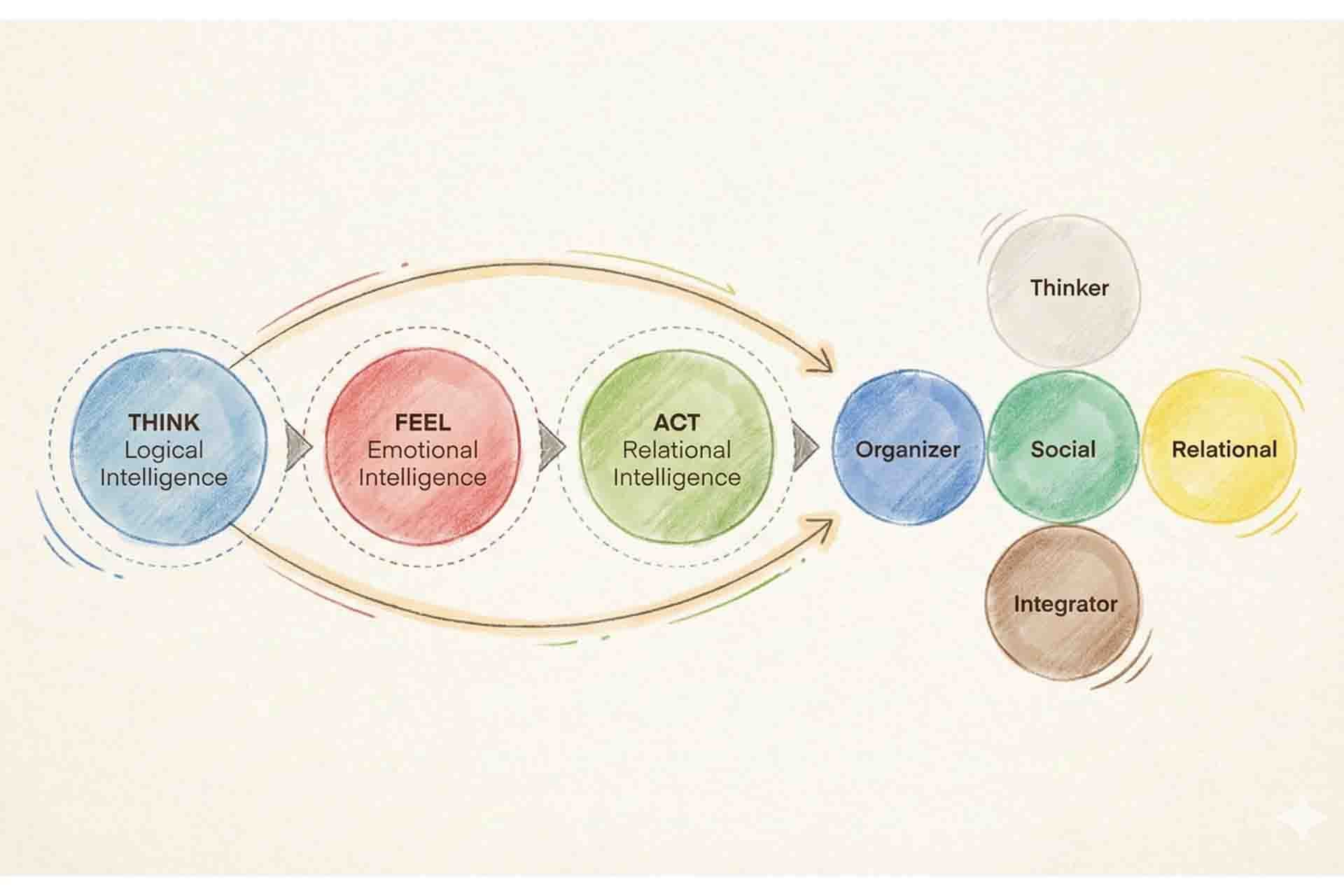
Not only in romance: modern research shows that your attachment style profoundly affects your efficiency in remote collaboration, the degree of emotional dependence on AI companions, and even the decision-making logic when dealing with digital assets.
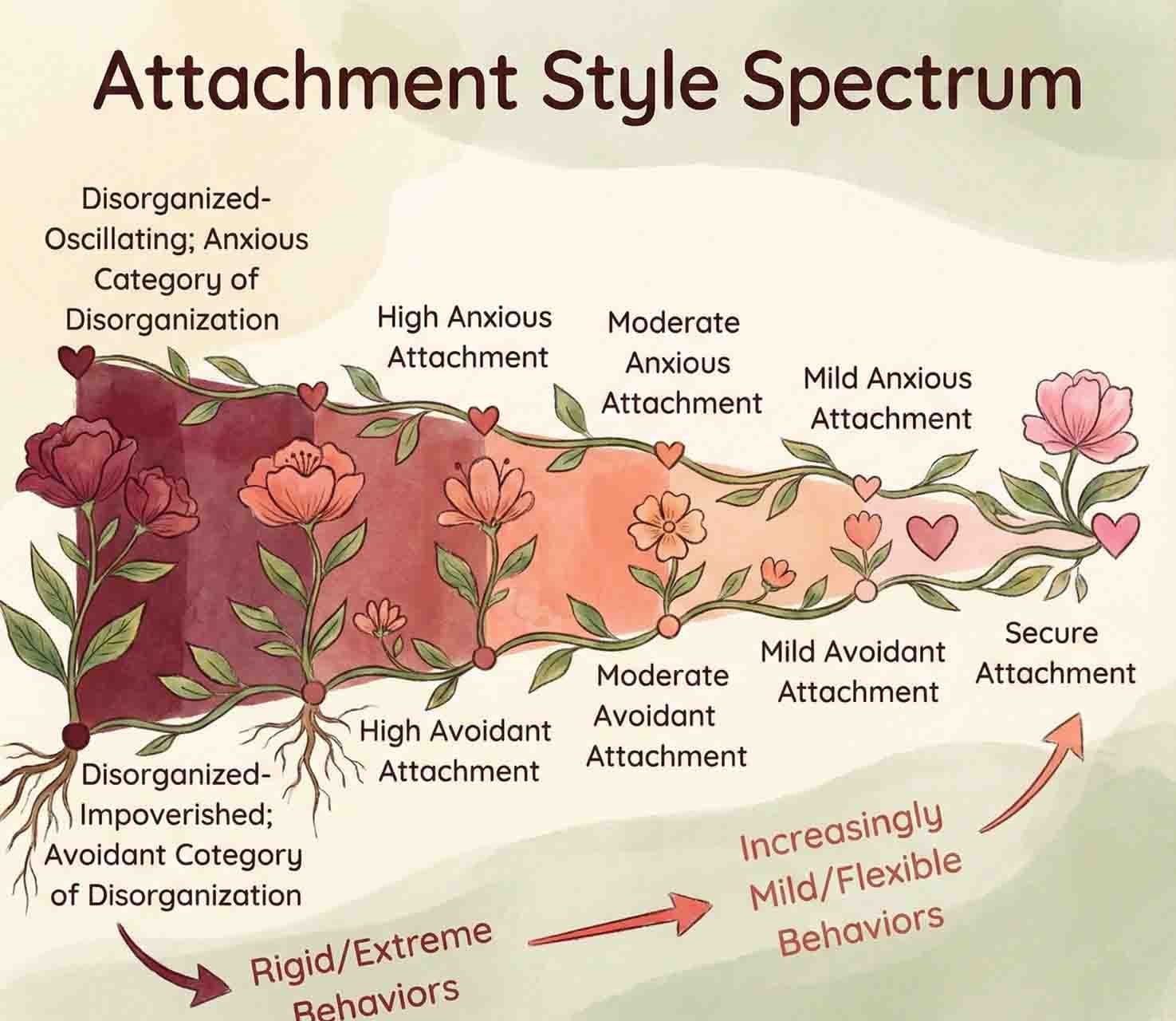
Spectrum rather than boxes:
We no longer simply put ourselves into “anxious” or “avoidant” boxes. What modern people need to understand is: how do my defence mechanisms operate under stress? Why does my nervous system overreact when I receive an ambiguous, cold message late at night?
3. The Crisis of "Fast-Food Psychology."
The internet is full of “find out your love-brain in 3 minutes” tests. Whilst this fragmented information satisfies instant curiosity, it often leads to anxiety about “over-diagnosis”.
In 2026, users really need content that stitches together “Data-driven Science” with “Lived Experience”.
This is why we decided to write this in-depth guide: To help you, amidst the mass of tools, find the one that really reaches the depths of your soul.
Our Methodology: How We Rigorously Vetted the Tools of 2026
To screen out tools that really have insight, our evaluation framework is based on the following three core dimensions:
1. The Scientific Pillar: Psychometric Validity
We excluded all fun tests that lack empirical research support. We focused on:
Scale basis: whether based on psychological models such as the ECR-R (Experiences in Close Relationships – Revised)
Or the AAI (Adult Attachment Interview), which have been validated over decades.
Reliability consistency: whether the test results are stable in different time periods, and different emotional states, and not a random game of chance.
2. The "Actionability" Coefficient
In 2026, if a test only gives you a “name”, it is incomplete. Our standard for evaluation is:
From diagnosis to intervention: Does the tool provide subsequent exercises based on neuroplasticity?
Scenario suggestions: can it give specific coping strategies for contemporary social dilemmas (such as “Ghosting culture”, “workplace boundaries”)?
3. The Meaning Gap & Narrative Depth
This is the most sensitive indicator. We tested the “readability” and “resonance”* of the test reports.
De-pathologising: excellent tests should not make you feel as if you “are ill”, but should make you feel as if you “are seen”.
Visual and interaction: in this age of visual excess, does the interaction design of the test help the user enter a state of deep introspection (Flow State), rather than mechanically ticking options?
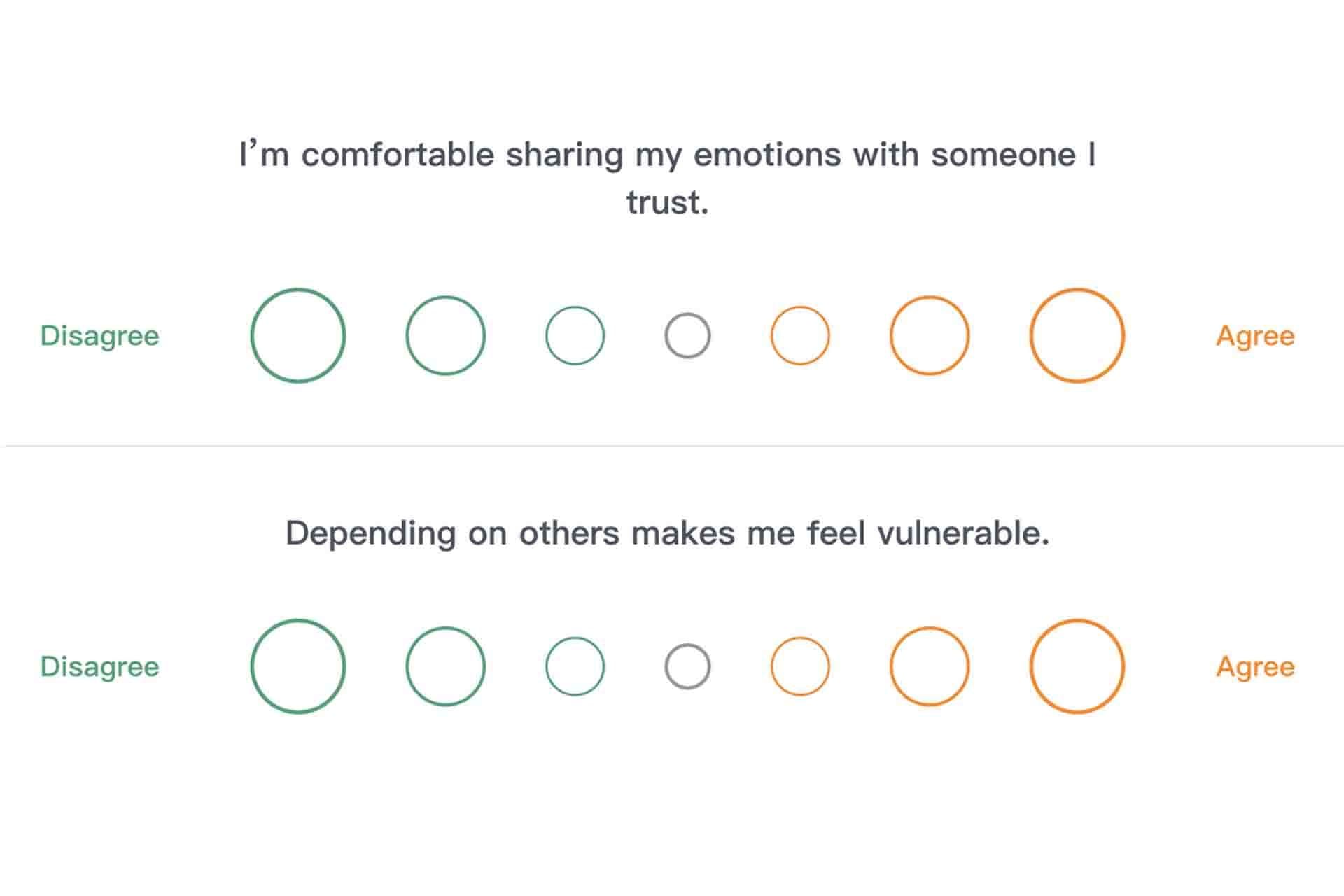
The Top 5 Attachment Style Tests to Take Right Now
1. The Attachment Project: The Clinical Standard
- Focus: Extensive research-based analysis. If you are a data-driven purist who demands clinical precision, this is your definitive starting point. Built on a foundation of clinical psychology, this tool provides an incredibly granular analysis of your raw data.
- Pros: Rigorous, professional, and backed by deep academic insights.
- Cons: The interface feels a bit legacy (old-school). Taking the test can feel like sitting for a high-stakes exam, which might trigger some "clinical anxiety" or "diagnostic pressure."
- Best For: Those who want a formal, comprehensive report they can actually bring to their therapist.
2. Verywell Mind’s Attachment Style Quiz: The Quick Scan
- Focus: Accessibility and immediate feedback. This is a byproduct of our high-speed 2026 lifestyle. In just five minutes, you’ll walk away with a high-level classification of your style.
- Pros: Lighting-fast, completely free, and a great "entry-level" first step.
- Cons: The epitome of "pop-psychology." It’s great at telling you what you are, but because it lacks semantic depth, it rarely explains the why.
- Best For: People who fall down a rabbit hole between TikTok scrolls and want a quick sanity check on their relationship patterns.
3. Psychology Today’s Relational Assessment: The Comprehensive Dive
- Focus: Detailed reports for those who want to read 10+ pages. An exhaustive assessment. If you’re ready to clear your weekend and pore over a massive dossier about your inner workings, this is the one.
- Pros: Incredibly wide-reaching, covering every nook and cranny from childhood imprints to adult behavioral triggers.
- Cons: Information overload. Many users report that after reading a 10-page report, they end up with more "analysis paralysis" than actual actionable advice.
- Best For: Hardcore self-analysis enthusiasts.
4. The Diane Poole Heller Discovery Tool: The Trauma-Informed Choice
- Focus: Somatic and healing-oriented approach. A niche but profound tool that prioritizes body awareness and trauma recovery. Pairs well with this video for deeper context: Watch here
- Pros: Deeply compassionate. It’s not just a measurement tool; it’s a guided "micro-healing" session.
- Cons: The narrative style is very "therapeutic" and flowy. For users who prefer a modern, minimalist, or data-heavy experience, it might feel a bit too "heavy" or abstract.
- Best For: Individuals currently working through relationship trauma or undergoing therapy.
5. Moody Wonder: The Holistic & Adaptive Personality Journey (Editor’s Choice)
- Focus: Bridging Scientific Precision with Daily Growth Paths. There’s a reason we’ve named this our Top Pick for 2026. Moody Wonder isn’t just a quiz—it’s a "lifestyle interface."
- Why it wins: It strikes the perfect balance between clinical rigor (based on the ECR-R model) and modern aesthetic sensibilities. It doesn’t just slap an "Avoidant" label on you; it tracks your emotional curves and tailors a "Daily Relational Practice" just for you.
- Core Advantage: It transforms sterile psychological labels into an intentional journey of self-discovery. At Moody Wonder, your emotions aren’t "problems to be solved"—they are "wonders waiting to be discovered."
Deep Dive: Understanding the 4 Main Attachment Styles in 2026

1. Secure Attachment: The Goal of Relational Growth
In the context of 2026, being "Secure" doesn’t mean you’re bulletproof or conflict-free—it means you possess high emotional regulation skills.
- Signs: You can express your needs honestly and don't spiral into "relationship anxiety" if a partner is temporarily out of reach.
- Keywords: Emotional intimacy, healthy boundaries, trust building.

2. Anxious-Preoccupied: Navigating the Need for Closeness
If you feel a sense of suffocation when someone leaves you on "read," you likely fall into this category. The core of this style is often a deep-seated fear of abandonment.
- 2026 Insight: In an era of instant messaging, the Anxious style faces unprecedented triggers. Learning to identify your "activation points" is your first step toward security.
- Keywords: Insecurity, excessive reassurance-seeking, abandonment issues.

3. Dismissive-Avoidant: Balancing Independence and Intimacy
For Avoidants, independence is their armor. When emotional density gets too high, they instinctively retreat to protect their personal boundaries.
- The Challenge: This style is often mislabeled as "cold," but it's actually a defense mechanism against vulnerability. In 2026, learning to build "warm boundaries" is their essential homework.
- Keywords: Emotional unavailability, fear of intimacy, self-reliance.

4. Disorganized (Fearful-Avoidant): Healing Through Awareness
The most nuanced type, often characterized by a "push-pull" dynamic—simultaneously craving and fearing intimacy. This is usually linked to early developmental trauma.
- The Hope: Through consistent self-awareness and guided practice, these volatile emotional waves can be stabilized and transformed into profound empathy.
- Keywords: Complex trauma, erratic behavior, healing journey.

Beyond the Label: What Should You Do After Getting Your Results?
1. From Labels to Action: How to Use Your Findings
Many people feel a sense of "label-induced paralysis" after discovering they are Anxious or Avoidant. But in 2026, the consensus is clear: a label isn't a life sentence—it’s your emotional roadmap.
- Identify Your Triggers: Once you have your results, don't rush to change. Just observe. When you feel the urge to "double-text" late at night, simply recognize: "That’s my anxious side showing up."
- Build a Communication Bridge: Share your results with your partner to create a "shared vocabulary," not to dodge responsibility. Example: "I’m feeling a bit overwhelmed right now, and my avoidant gears are turning. Give me 10 minutes to reset, and I’ll be back."
- Micro-Habits: Real change happens in the tiny, daily interactions.

2. Can Your Attachment Style Change in 2026? (The Power of Neuroplasticity)
Can I actually become "Secure"? The answer is a resounding YES. This is known as "Earned Secure Attachment." Thanks to research in neuroplasticity, we know the brain’s response patterns can be rewired. Through deliberate practice and awareness, even those with significant trauma can cultivate a steady internal sense of safety in the complex social landscape of 2026. It’s not an overnight miracle, but a gradual, adaptive evolution.
FAQ: Common Questions About Attachment Style Testing
Q1: Are online attachment style tests accurate?
A1: Accuracy depends on the tool's psychometric foundation. Tests based on clinical models like ECR-R (such as Moody Wonder or The Attachment Project) have high validity. However, remember that an online test offers a "dispositional profile," not a medical diagnosis.
Q2: Should I take the test with my partner?
A2: Absolutely. In 2026, "Co-assessment" has become the gold standard for boosting Relational Intelligence. Comparing your styles can instantly explain 80% of your recurring friction.
Q3: How often should I re-evaluate my style?
A3: We recommend a check-in every 6 months. Attachment styles are dynamic; major life pivots—like a new career, a move, or a new relationship can shift your internal safety margins.
Conclusion: Investing in Your Relational Health
In an age where algorithms might know you better than you know yourself, the most valuable investment isn't cryptocurrency—it’s your relational health. Understanding your attachment style isn't about staying stuck in the past; it’s about reclaiming the ability to form deep, resilient connections in the digital wilderness of 2026.
The Final Step: The Moody Wonder Difference
If you’re tired of outdated tests that only give you cold numbers—if you crave an experience that bridges psychological depth with daily growth—you’ve found it.
CTA:
“Moody Wonder: The Only Test that Bridges Personality with Daily Growth Path.”
This isn't just another quiz you’ll take and forget. Built on a foundation of clinical expertise and 2026 behavioral intervention logic, we’ve designed more than a report—we’ve designed your personal evolution guide.
**👉 Start Your Adaptive Journey with Moody Wonder Now**