Understanding the Roots of Personality Theory
The foundations of personality theory reveal that human nature is both structured and fluid — guided by biology, molded by culture, and refined through experience. From Freud’s unconscious mind to modern cognitive and trait models, every theory contributes a piece to the puzzle of individuality.
Personality science
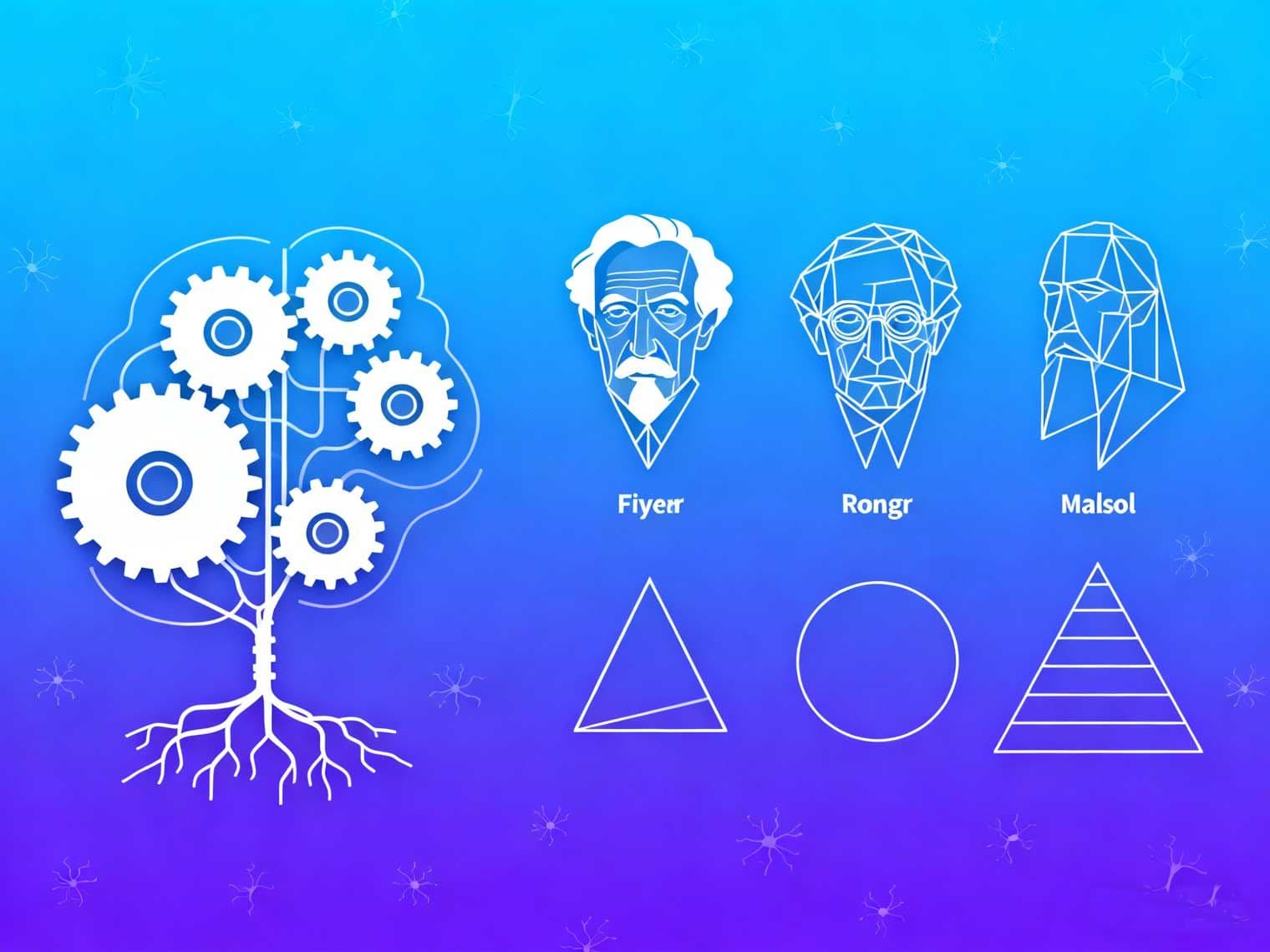
The Nature of Personality
Personality is the enduring pattern of thoughts, emotions, and behaviors that define how a person interacts with the world. It influences how we think, feel, and respond to everyday situations. While some traits are innate — such as temperament and emotional reactivity — personality as a whole develops through a continuous interaction between biology, experience, and environment.
In psychological terms, personality is not just what we do, but also how we perceive, interpret, and give meaning to life. It is the silent framework that shapes our preferences, motivations, and values. This complexity is what makes personality theory such a rich and essential field in understanding human nature.
The Historical Foundations
The exploration of personality began with early philosophers and medical thinkers, who tried to explain human differences through body types, temperaments, or moral character. However, modern personality theory truly emerged in the late 19th and early 20th centuries.
Sigmund Freud’s psychoanalytic theory marked the beginning of systematic personality study. He proposed that behavior is driven by unconscious forces, internal conflicts, and early childhood experiences. This was revolutionary — it suggested that unseen mental dynamics, not just external actions, shape who we are.
Later thinkers such as Carl Jung, Alfred Adler, and Karen Horney expanded these ideas, integrating social, cultural, and existential perspectives. Jung emphasized archetypes and the collective unconscious, showing that myths and symbols influence the psyche across cultures. Adler focused on human striving and the pursuit of significance, while Horney introduced the role of anxiety and social relationships.
These early theorists created a foundation that still influences today’s understanding of personality — that it is multidimensional, shaped by both inner drives and external contexts.
The Biological Perspective
Personality has deep biological roots. Research in genetics and neuroscience shows that our behavioral tendencies are partly inherited. Traits like extraversion, openness, and emotional stability have measurable heritability factors. Brain imaging studies reveal that specific neural systems are linked to reward-seeking, self-control, or emotional reactivity, forming the biological infrastructure of personality.
However, biology does not determine destiny. It sets a range within which environmental factors — such as upbringing, education, and life experiences — shape the final outcome. For instance, a child with a naturally cautious temperament may grow more confident in a supportive environment but may develop anxiety in an unpredictable one. Personality therefore evolves as the brain interacts with life.
Environmental and Cultural Influences
Our social environment, culture, and family play profound roles in shaping personality. Culture teaches values, communication styles, and emotional norms; family provides the first models of trust, discipline, and love. Education exposes individuals to new ways of thinking, while personal experiences — success, loss, trauma, or growth — refine how we approach life.
For example, collectivist cultures often encourage harmony and interdependence, nurturing traits such as agreeableness and empathy. In contrast, individualistic cultures promote autonomy and self-expression, fostering confidence and assertiveness. Each person’s personality reflects a unique blend of these influences, continually shaped by social learning and cultural expectations.
Major Theoretical Frameworks
Over time, psychologists have proposed various frameworks to understand and measure personality. Among them, two models stand out for their impact and clarity: the Big Five and the MBTI.
The Big Five Personality Traits — Openness, Conscientiousness, Extraversion, Agreeableness, and Neuroticism — describe personality through measurable dimensions rather than fixed categories. This model is supported by decades of empirical research and applies across cultures. It allows psychologists to predict behavior, job performance, and well-being based on trait combinations.
The MBTI (Myers-Briggs Type Indicator) takes a more typological approach, categorizing people into 16 personality types based on four key preferences: Extraversion/Introversion, Sensing/Intuition, Thinking/Feeling, and Judging/Perceiving. Although debated in scientific circles, MBTI remains one of the most popular tools for personal development, career counseling, and team dynamics. It emphasizes that understanding one’s type can lead to self-awareness and better interpersonal relationships.
You can explore your own personality type and cognitive patterns through MoodyWonder’s MBTI Advanced Personality Insights
Personality in Daily Life
Personality theory isn’t confined to academic research — it has powerful implications for everyday life. In education, understanding students’ personality patterns helps tailor teaching methods to individual learning needs. In workplaces, personality insights improve communication, leadership, and collaboration. In therapy, they help uncover recurring emotional patterns and guide personal transformation.
For instance, individuals high in conscientiousness may excel in structured environments but struggle with flexibility. Those high in openness thrive in creativity but may find routine tasks dull. Understanding these patterns helps individuals make informed life choices, develop strengths, and balance weaknesses.
In relationships, personality theory helps explain differences in communication and emotional needs. Knowing whether someone is more intuitive or sensing, thinking or feeling, can improve empathy and reduce conflict. Personality awareness becomes a form of emotional intelligence — the ability to navigate human complexity with understanding.
Personality Development and Change
A common misconception is that personality is fixed. While certain traits remain stable, research shows that personality evolves throughout life. Experiences, major transitions, and deliberate self-reflection can reshape our tendencies and coping strategies.
For example, people often become more conscientious and emotionally stable with age — a pattern known as “maturity principle.” Others intentionally cultivate traits such as openness or agreeableness through mindfulness, therapy, or exposure to new perspectives.
Personality change is not about becoming someone else but about becoming more adaptive and self-aware. Understanding one’s core traits allows for conscious growth rather than passive reaction to life circumstances. Self-knowledge is the foundation of personal transformation.
Case Reflections in Personality Expression
Consider how personality theory explains real-world situations. An introverted designer might prefer solitary work that allows for deep focus, while an extroverted marketer draws energy from collaboration. A perfectionist entrepreneur may achieve excellence but also risk burnout if they lack balance.
Such differences are not limitations — they represent diversity in human functioning. Recognizing them enables acceptance, cooperation, and healthier relationships. It also highlights that success and happiness come from alignment between personality and environment, not from forcing conformity.
The Future of Personality Science
Today, personality theory is entering a new era shaped by neuroscience, genetics, and artificial intelligence. Brain scans reveal how emotional regulation links to neural networks. AI-driven assessments analyze language patterns to infer personality traits with remarkable accuracy. These technologies deepen our understanding of how stable and dynamic aspects of personality coexist.
At the same time, ethical and cultural considerations remind us that personality cannot be reduced to data. The study of personality remains, at its heart, a study of human meaning — of how each person’s story shapes their identity. Future research aims to integrate science and self-understanding, offering tools that help people live more consciously and authentically.
You can explore these evolving ideas and discover your unique personality dynamics at Moody Wonder
Conclusion
The foundations of personality theory reveal that human nature is both structured and fluid — guided by biology, molded by culture, and refined through experience. From Freud’s unconscious mind to modern cognitive and trait models, every theory contributes a piece to the puzzle of individuality.
Ultimately, personality theory is not only about classification, but about awareness. It reminds us that understanding ourselves is the first step toward growth, empathy, and genuine connection. In the complexity of personality lies the map to a more conscious life — one that embraces both who we are and who we can become.